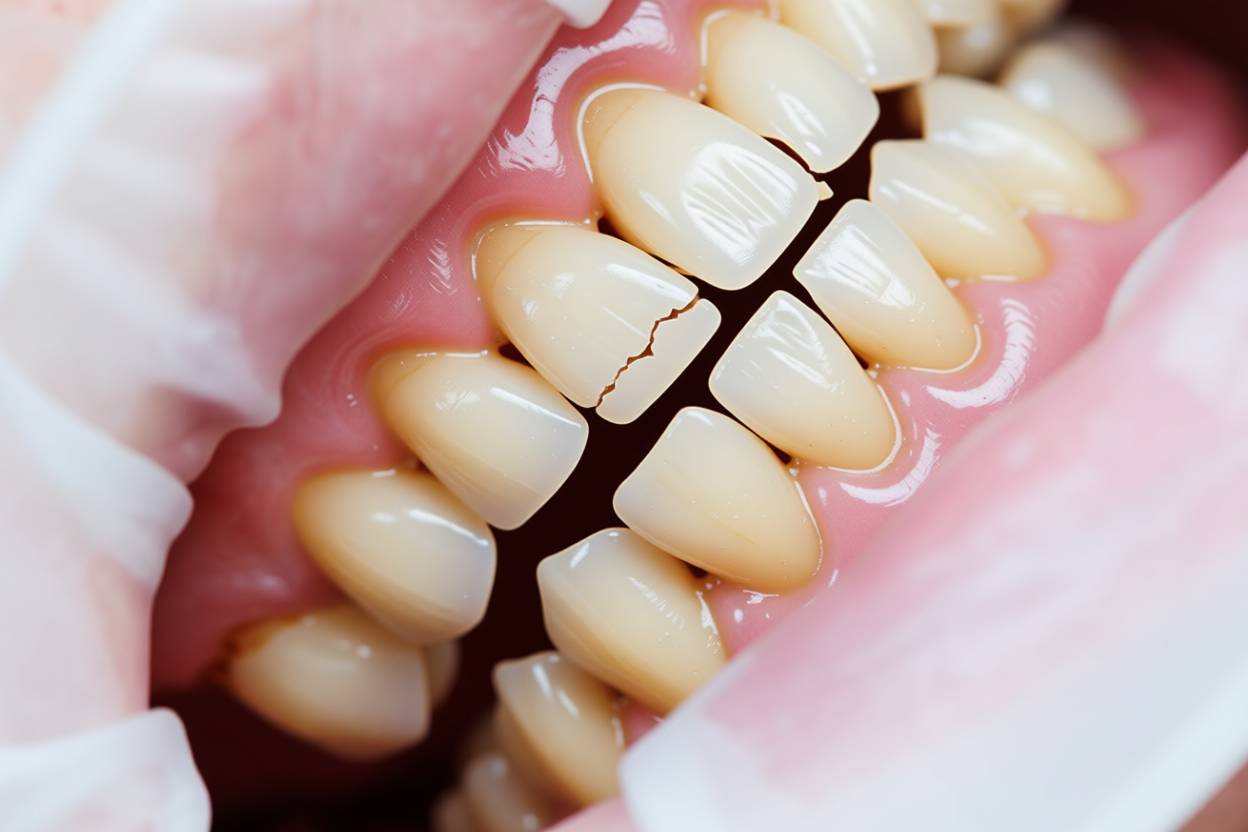
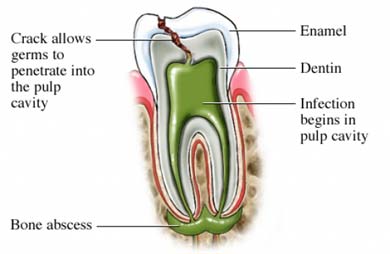
A cracked tooth can range from a small enamel crack to a deeper fracture that affects the nerve (pulp). Some cracks are painful; others are difficult to detect but can worsen over time.
Common causes
Chewing hard foods (ice, hard lollies, nuts)
Trauma or a blow to the mouth
Grinding/clenching (often at night)
Large fillings weakening the tooth
Hot/cold stress on enamel
Root canal treated teeth can become more brittle
Symptoms to watch for
Sharp pain when biting that quickly disappears
Intermittent sensitivity (hot/cold/sweets)
Pain when chewing or releasing bite pressure
Gum tenderness near one tooth
Sometimes no pain at all
How we diagnose a cracked tooth
Cracks may not show clearly on X-rays. Diagnosis may include:
Focused exam and bite testing
Sensitivity testing and gum assessment
Imaging when clinically indicated
Reviewing triggers (cold/heat/chewing)
Treatment options
Depends on crack location, depth, and symptoms:
Monitoring (for tiny surface cracks with no symptoms)
Bonding or filling (minor stable cracks)
Crown (to stabilise and protect against splitting)
Root canal treatment (if the nerve is involved)
Extraction (if the tooth cannot be saved)
What to do until you’re seen
Avoid chewing on that side
Soft foods; avoid extreme hot/cold
Use appropriate OTC pain relief if safe for you
When to book urgently
Severe pain, swelling, or fever
Tooth breaks after trauma
Pain that wakes you at night or worsening symptoms
FAQs
Can a cracked tooth heal on its own?
No — cracks don’t “heal”, but some can be monitored if stable and symptom-free.
Do I always need a crown?
Not always. It depends on the crack and tooth strength.